Control Effectiveness Assessment
Record the existing control behind each risk, judge it against defined evidence, and let its effectiveness shape the residual risk and the treatment you approve.
Made for: Risk Analyst, Control Owner, Internal Auditor
Sounds familiar?
A control is documented and marked as implemented, so the risk looks covered. Nobody has checked the evidence that it works, the residual risk becomes a guess, and treatment decisions rest on an assumption no one can explain.
The status reflects what was planned, not what the evidence shows.
Percentages are entered without the evidence or notes that justify them.
Without one method, two similar risks end up with different results.
How MUNTABIQ helps
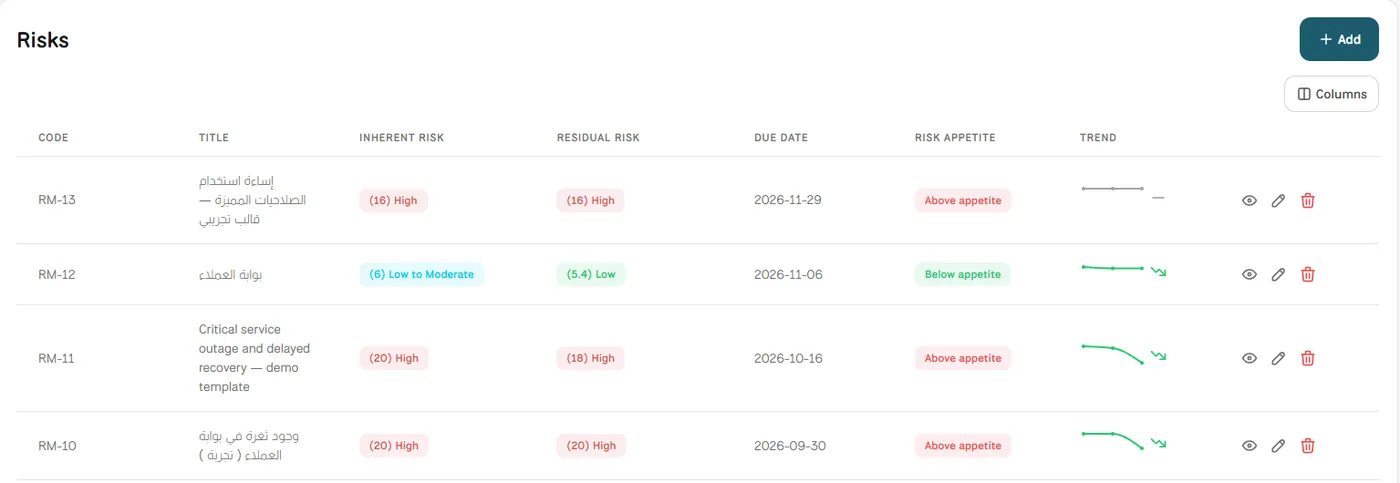
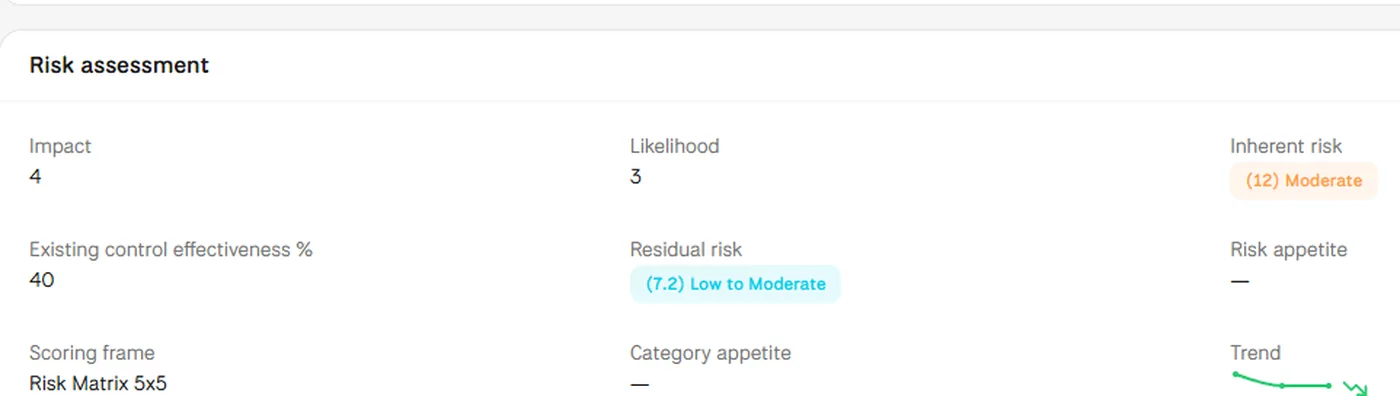
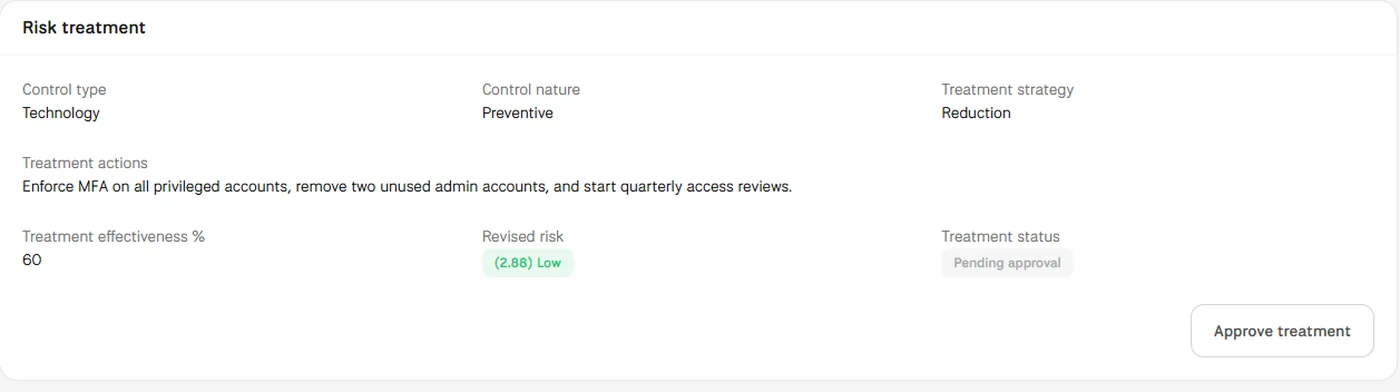
In MUNTABIQ each risk carries its existing control and a rating of that control's effectiveness. Inherent risk comes from impact and likelihood, and residual risk is calculated from them together with the existing control effectiveness. In the compliance assessment, the control is judged against its required evidence on an evidence-based maturity scale, with notes that record the reasoning. When a treatment is proposed, the owner enters its effectiveness, sees the revised risk and submits it for approval.
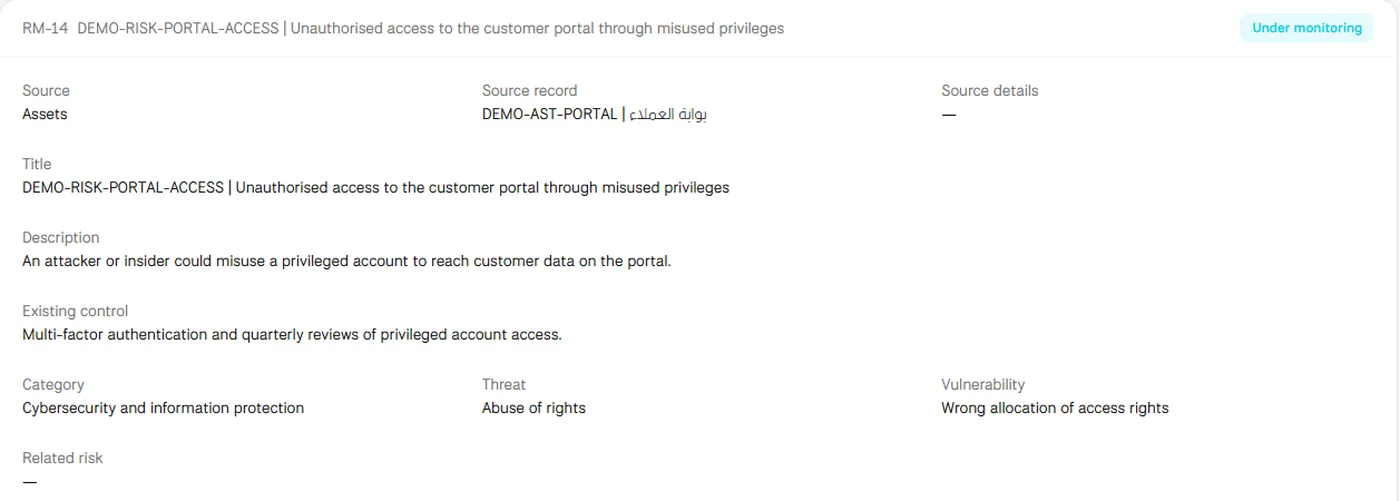
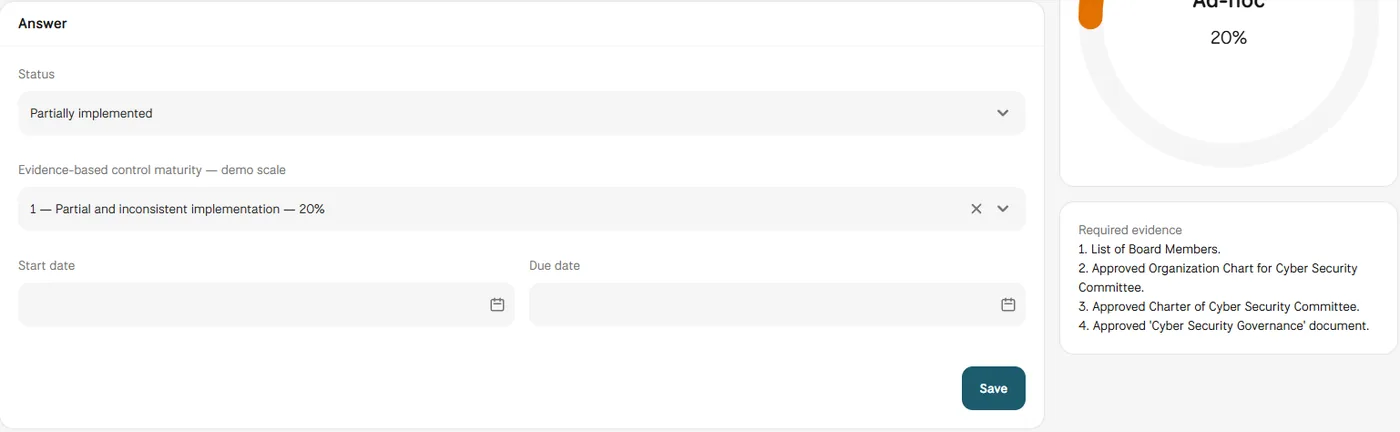
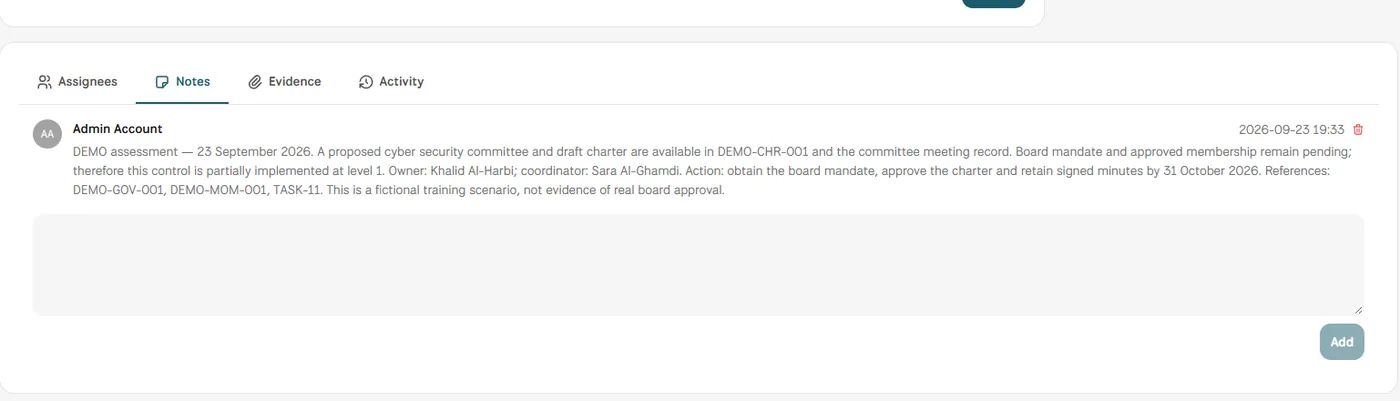
Screens from MUNTABIQ with demo data.
Effectiveness rests on required evidence, uploaded files and written notes, not on assumption.
Each risk shows its existing control and the difference between inherent and residual risk.
Revised risk and treatment status show why a treatment was chosen and whether it is approved or pending.
Rates existing controls on each risk and compares inherent and residual risk in the register, and revised risk on the risk page.
Uploads evidence for the control, explains the rating in notes and submits treatments for approval.
Checks the evidence, notes and change history behind a control rating before relying on it.
Yes. In the risk assessment, residual risk is calculated from impact, likelihood and the existing control effectiveness percentage, so a more effective control lowers the residual risk. The scales and levels used are set up with you during the demo.
Yes. Each control lists its required evidence, files are uploaded in its Evidence tab with the name of who added them and when, and the Notes tab keeps the reviewer's reasoning.
Yes. You can edit the risk to update the existing control effectiveness, the risk register shows a trend for each risk, and in Compliance the Activity tab keeps every change to a control's answer.
Request a demo and we will walk you through these steps on the risks and controls that matter to you.
