Incident Response Coordination
Log each incident with its type, impact and owner, refer to the response plan written for it, and keep the actions taken and lessons learned on one record that management can follow.
Made for: Incident Manager, SOC Lead, CISO
Sounds familiar?
A suspicious email reaches the finance team, and updates start arriving by phone, chat and email. Someone contains the issue, someone else informs the manager, and a week later nobody can say who owned it, what was done or whether it is closed.
Each person holds part of the story, so the full picture has to be rebuilt after the fact.
Actions are agreed on a call, but nobody is recorded as responsible or given a due date.
Before every management update, someone counts open and overdue incidents from notes and messages.
How MUNTABIQ helps
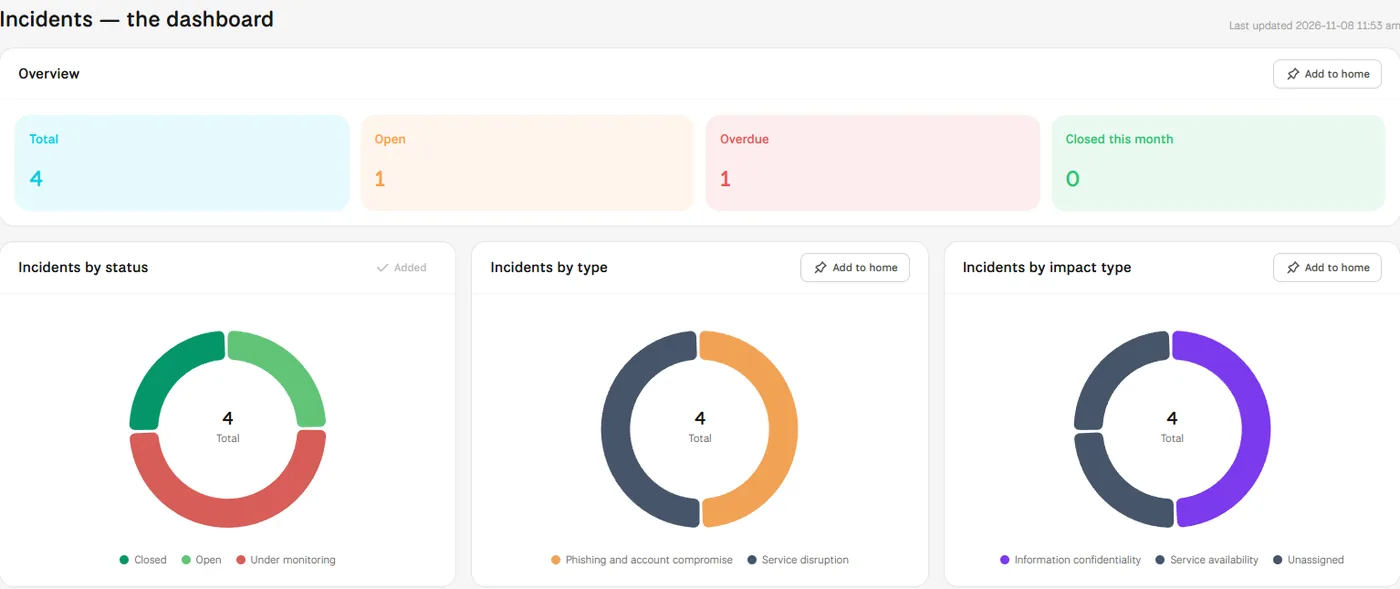
MUNTABIQ gives every incident one record: type, control status, department, owner, assignees and due date, then impact, affected systems, the parties informed and the remediation. Assignees are notified inside the platform and record what they did on the same record. Incident response plans hold the activation criteria, recovery objectives and RACI roles agreed in advance, and the incidents dashboard counts open, overdue and closed incidents. MUNTABIQ coordinates and records the response; it does not replace your SOC or monitoring tools.
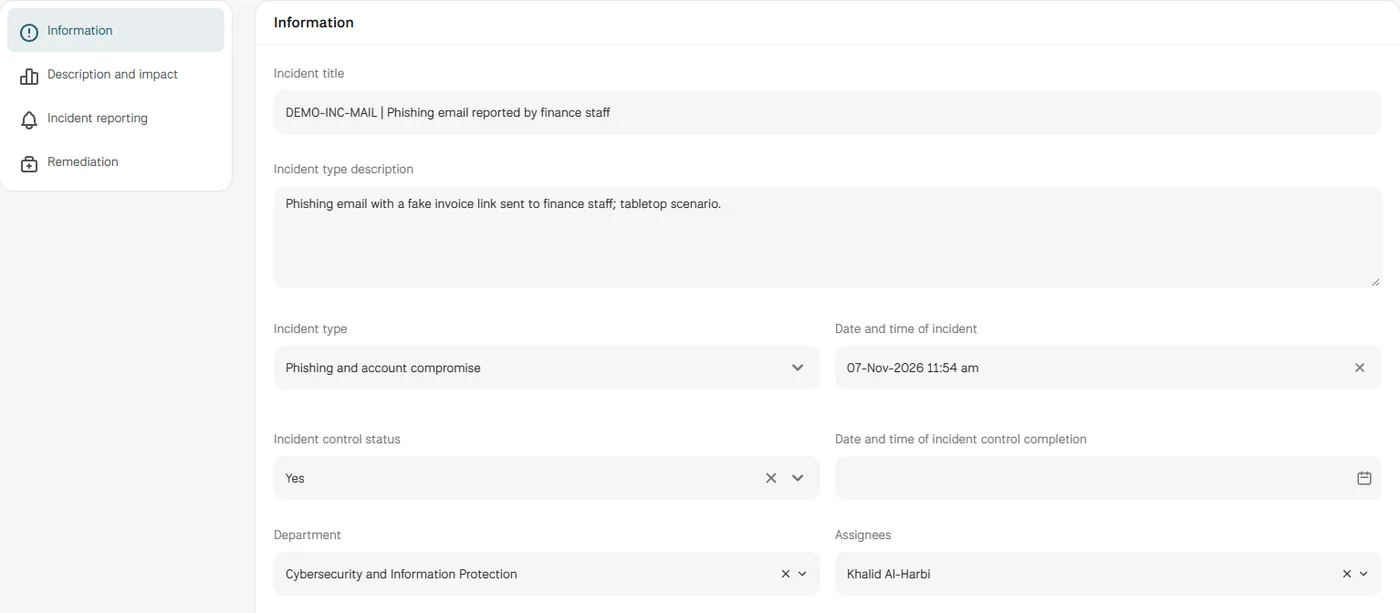
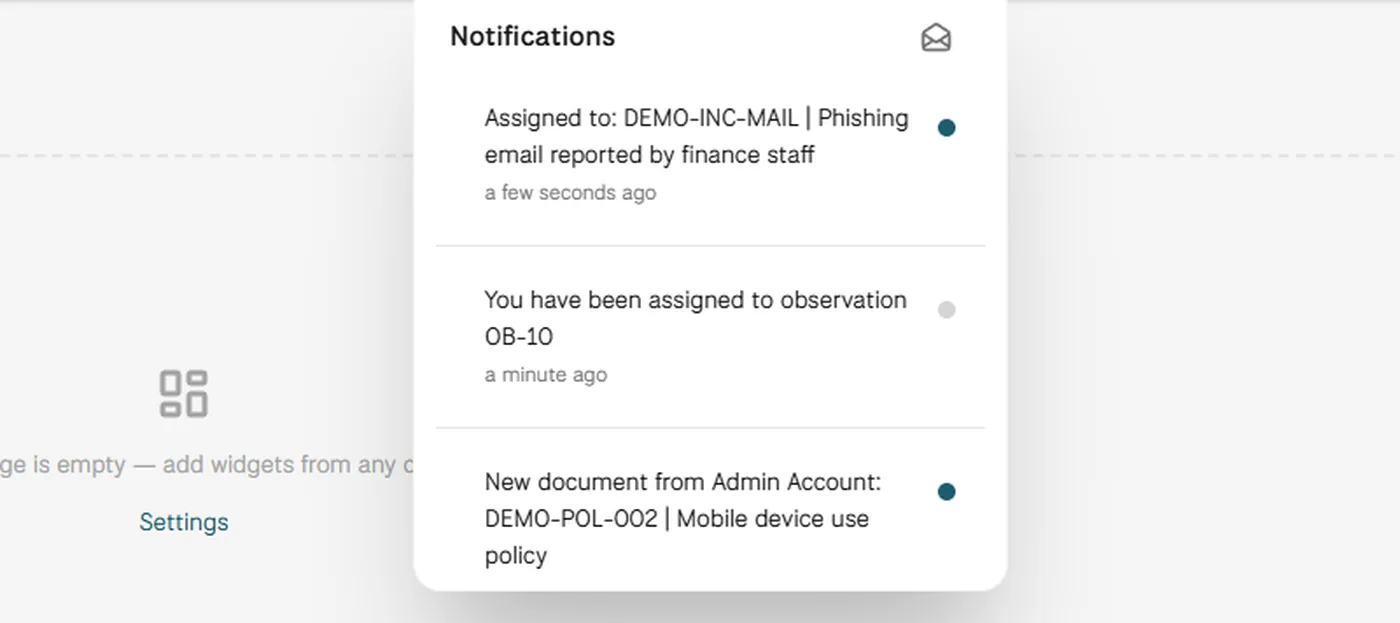
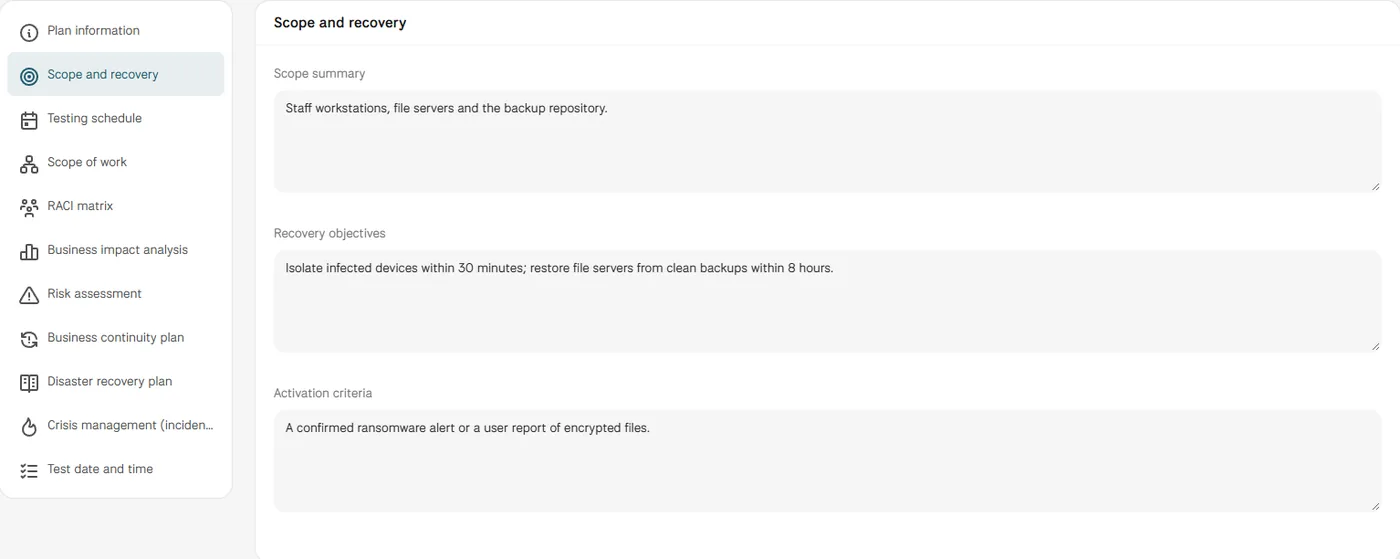
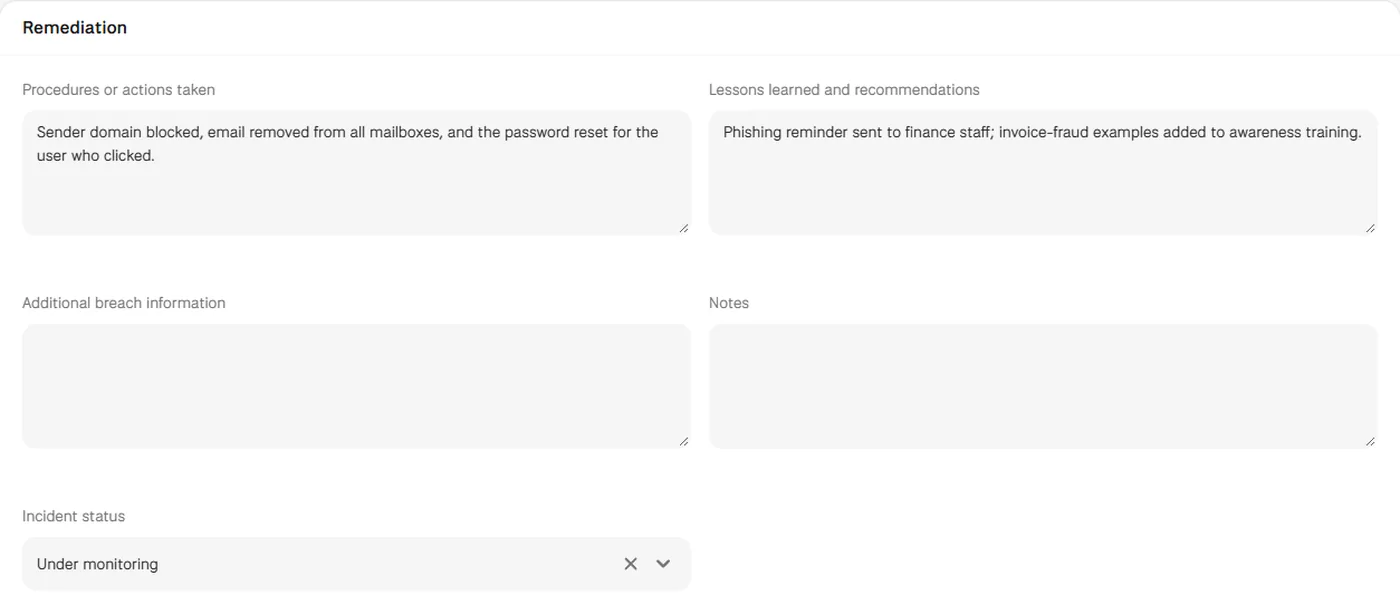
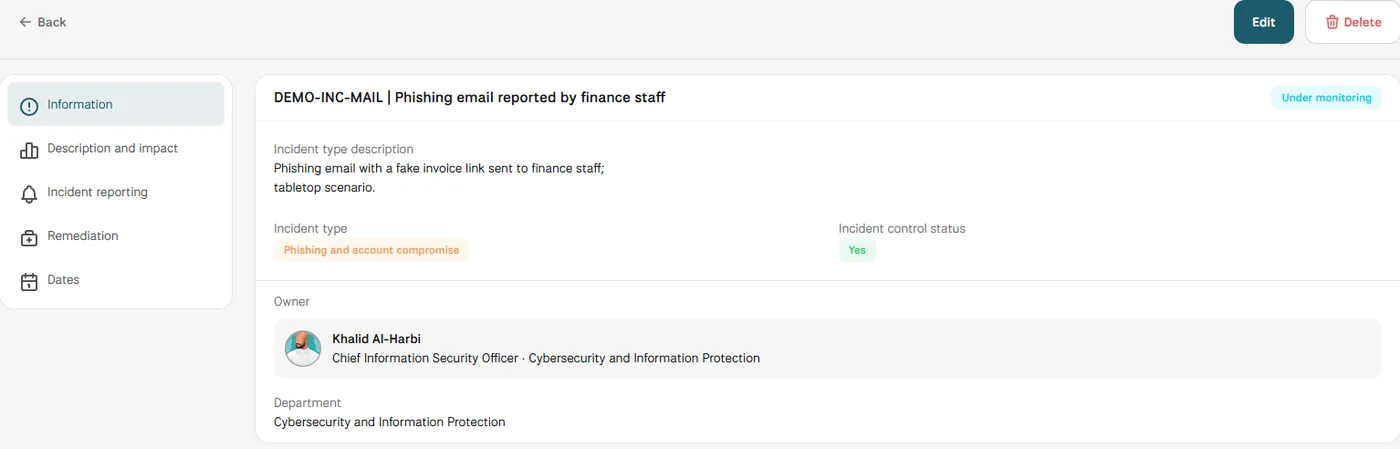
Screens from MUNTABIQ with demo data.
Information, impact, parties informed and remediation stay together instead of across chats and inboxes.
Every incident has an owner, assignees and a due date, and each assignee is notified of what is theirs.
The dashboard shows incidents by status, type, impact and department, with no counting by hand before each meeting.
Logs incidents, sets their owners and follows each one until it is closed, with the actions taken on record.
Keeps detection and containment in the SOC tools, and records the incident, its impact and the remediation in MUNTABIQ for governance.
Sees open and overdue incidents on one dashboard and checks that response plans and lessons learned are kept up to date.
Incidents are added to the register by users with permission to add them, from any department, and the dashboard shows incidents by department and by reporter. Recurring scenarios, such as phishing, can be saved as templates in the incident library. If you want incidents to arrive from other systems, we review that with you in the demo.
Each plan holds its activation criteria, recovery objectives and RACI matrix, and its status shows whether it is Draft or Active. Under Crisis management (incidents) you link the incident to the plan, so the two stay connected. The plan is for coordination and records; it does not replace your SOC or monitoring tools.
Yes. Each incident has an owner and one or more assignees who are notified in the platform, and each plan has a Tasks section and a RACI matrix for the response activities. Assignees update the status and remediation on the incident record itself.
Request a demo and we will walk you through these steps on the incident types your team handles.
