Multi-Entity GRC Management
Model your group, its companies and their departments in one organisation structure, give each programme its own workspace and team, and see risks and incidents by department instead of collecting reports by email.
Made for: Group CISO, Group Compliance Head, Subsidiary Representative
Sounds familiar?
Group compliance asks each subsidiary for a status update. One sends a spreadsheet, another a slide deck, a third a list of open items with no owners, and each uses different department names. Building one picture for the board takes days of reconciling.
Each company names its departments and assigns responsibilities its own way, so records are hard to compare.
Updates arrive as spreadsheets, slides and emails, each structured differently.
The group team only sees what subsidiaries choose to send, and only when they send it.
How MUNTABIQ helps
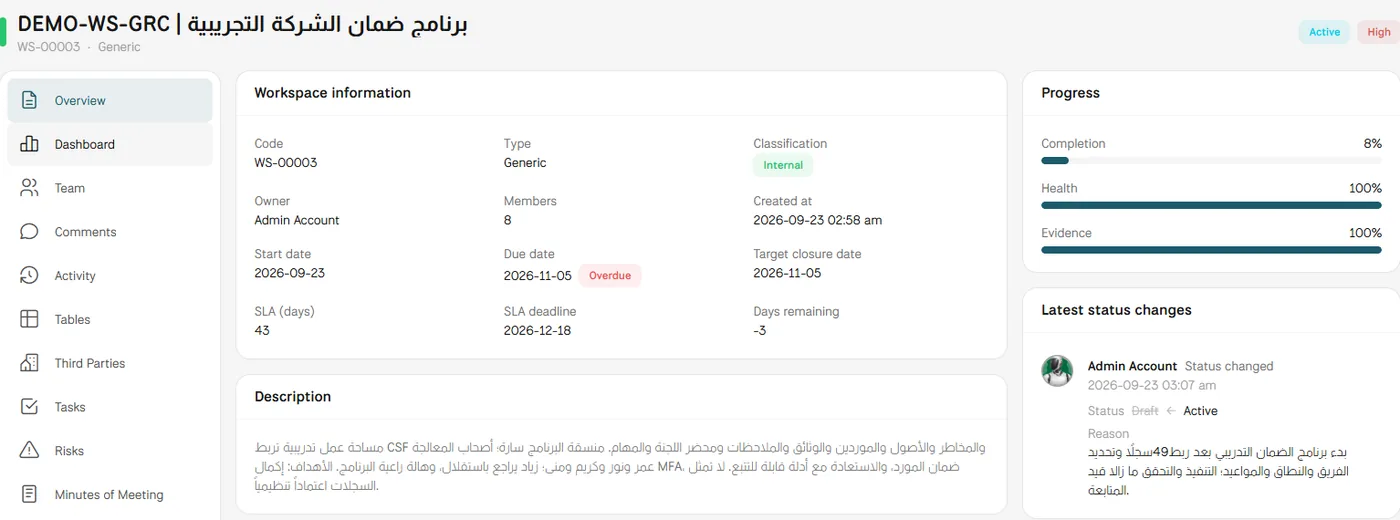
MUNTABIQ starts from one organisation structure: a tree of units, each a Company or a Department under its parent, with Arabic and English names. Every Department, Unit and Assignees picker in the platform is built from it, so risks, incidents and plans are assigned with the same names everywhere. Workspaces then group the records of each programme with its owner, team, progress and status history, and the risk and incident dashboards show records by department. How access is divided between companies is configured for each deployment.
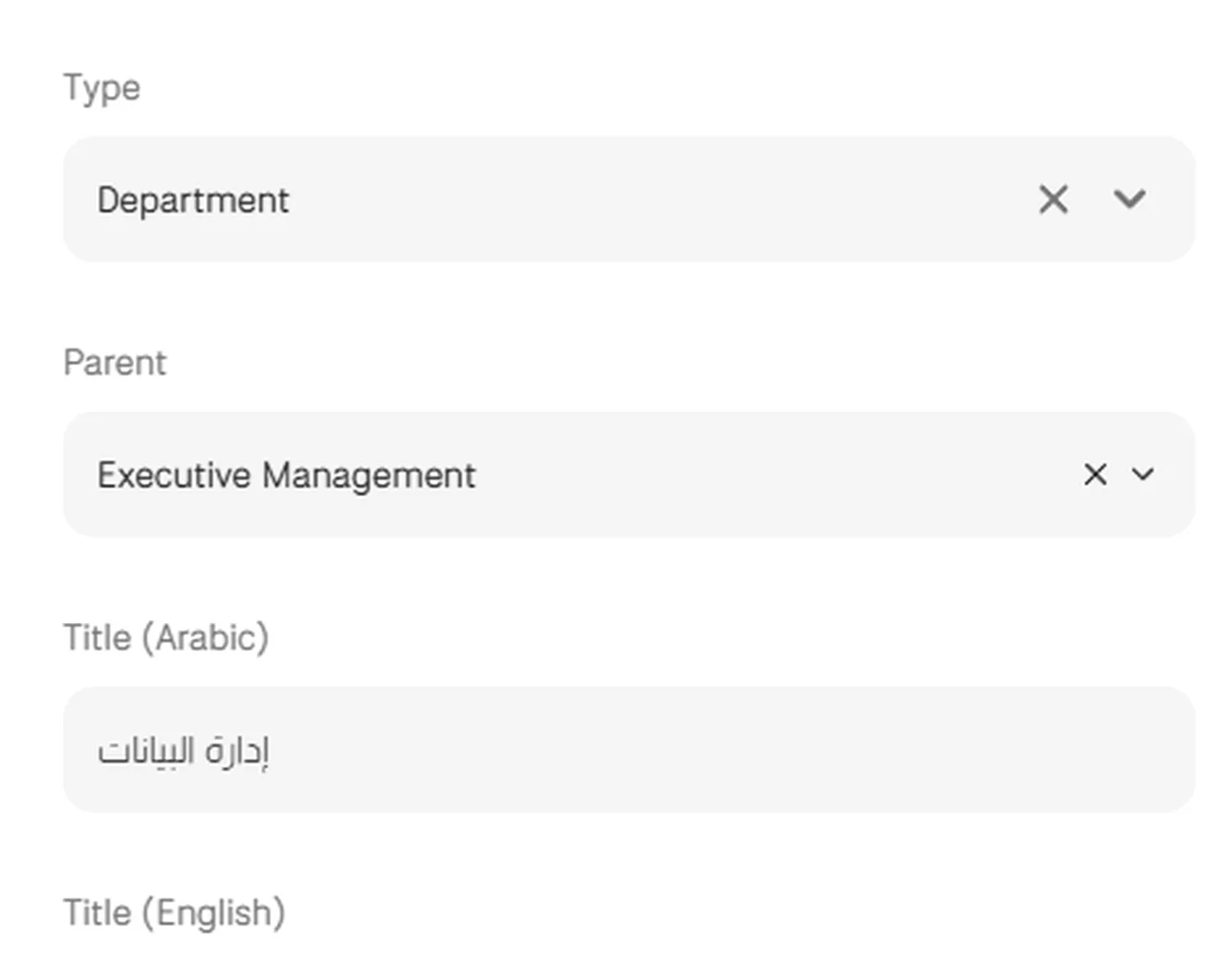
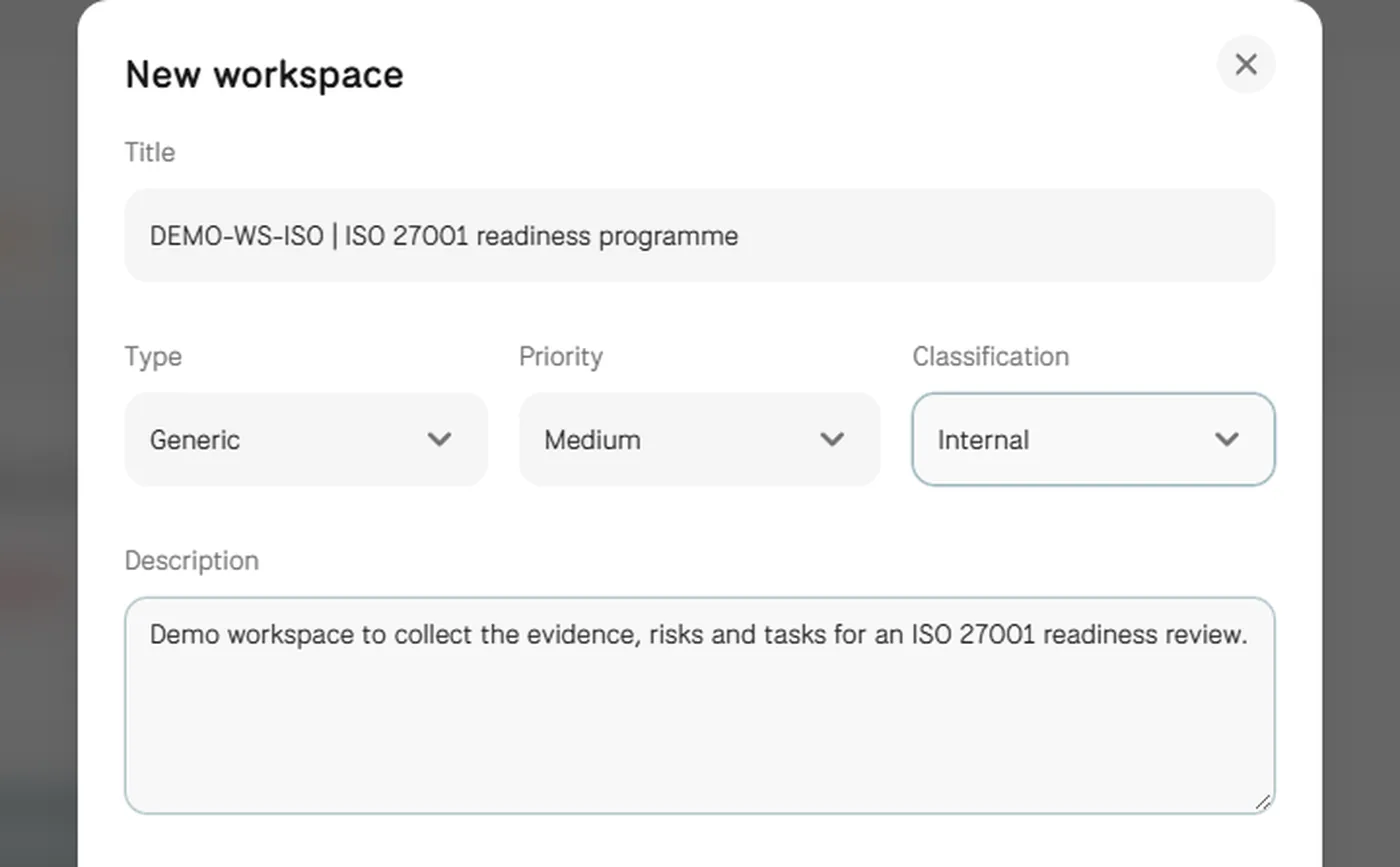
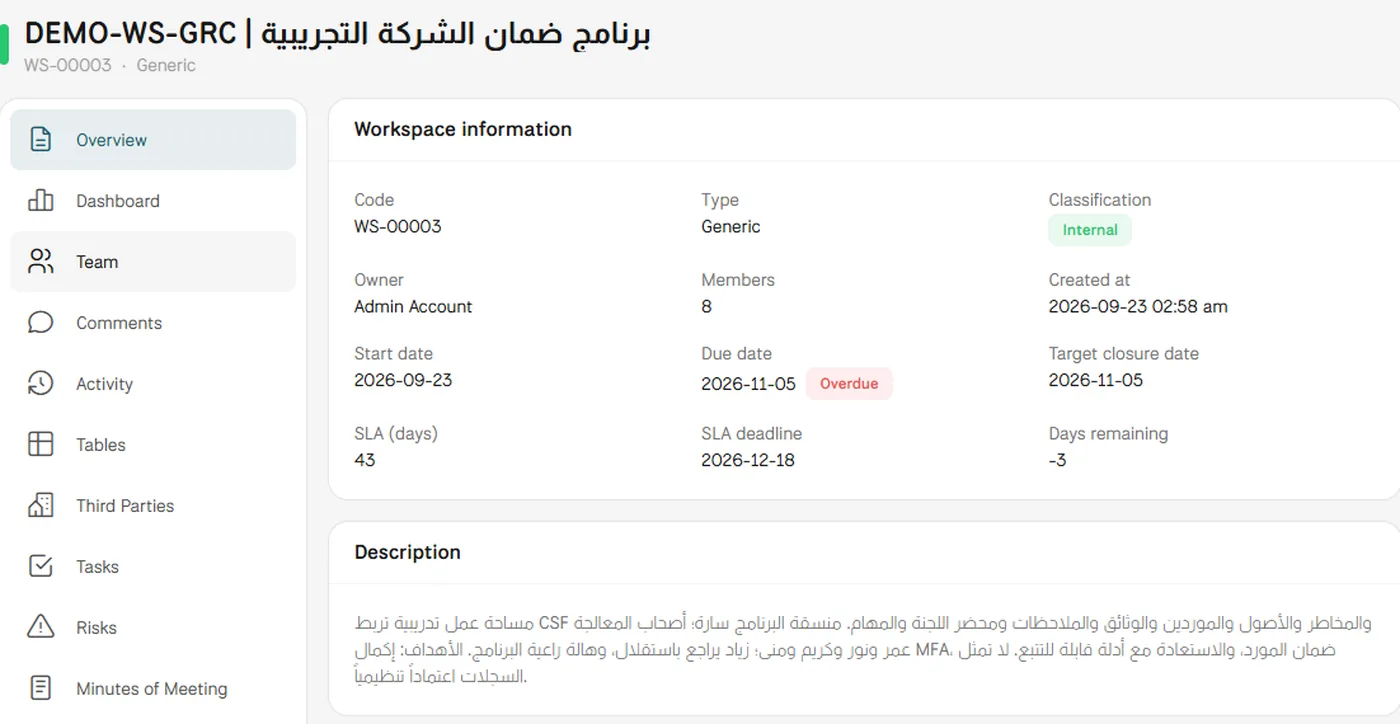
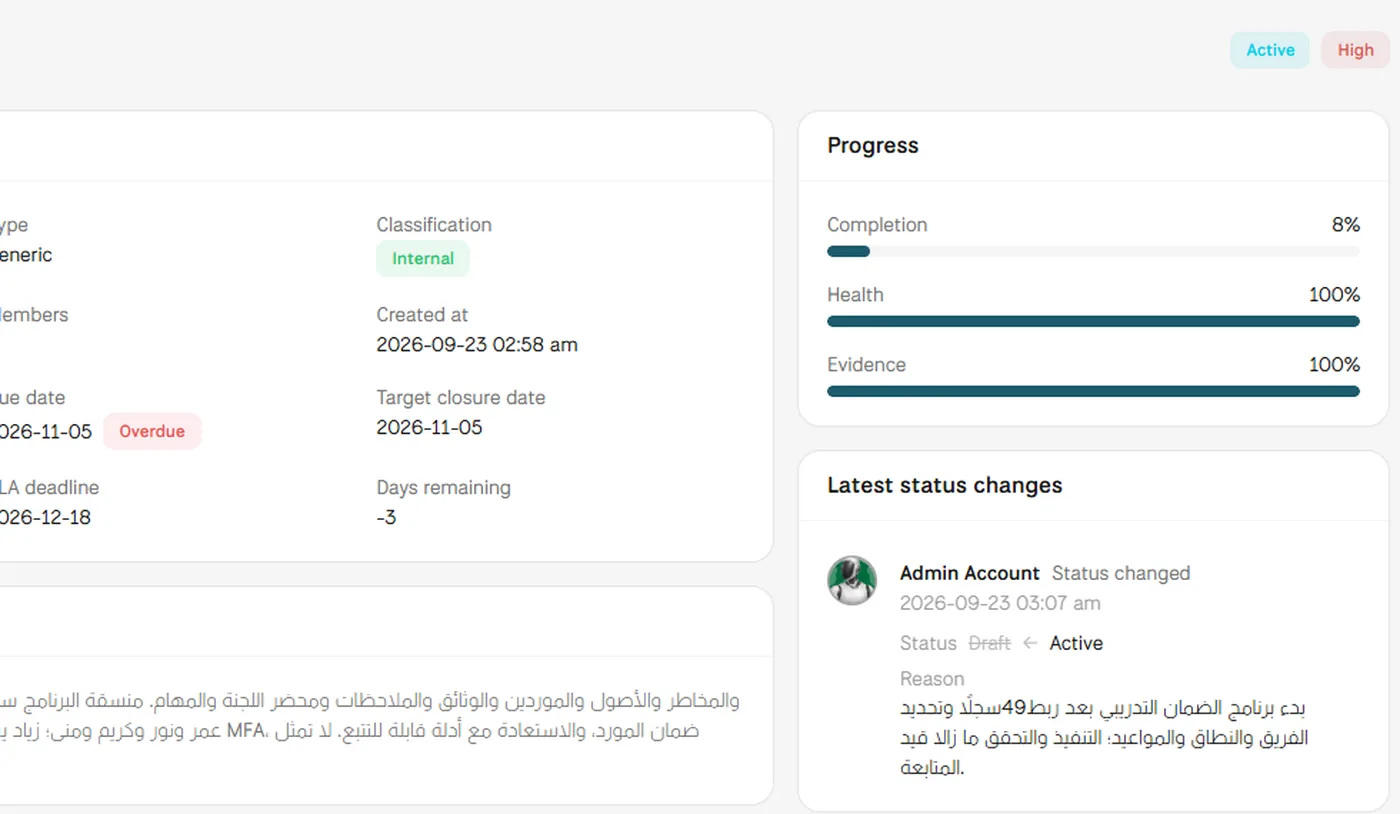
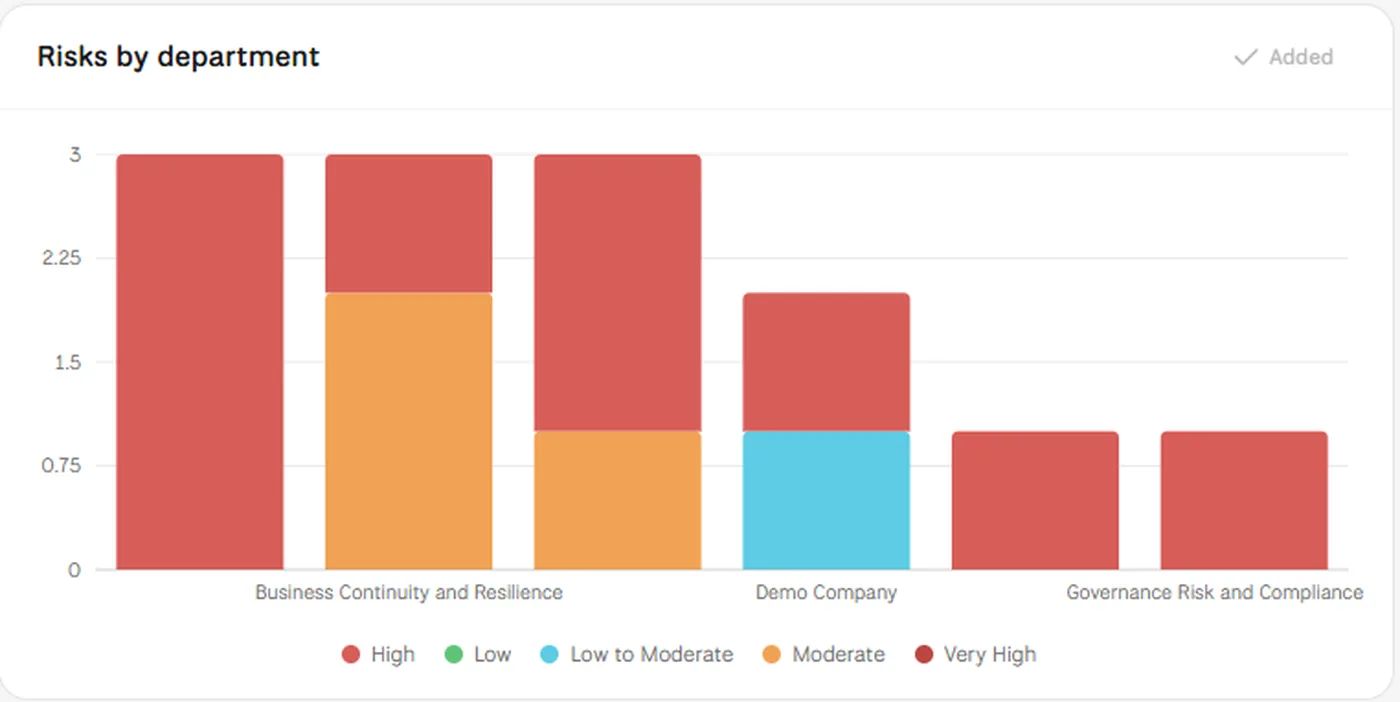
Screens from MUNTABIQ with demo data.
Departments and assignees come from the same tree across the platform, so records line up between companies.
Every programme follows the same workspace layout: team, records, progress and status history.
Dashboards show risks and incidents by department, so the group team sees where attention is needed.
Follows the progress of each programme and sees risks and incidents by department across the group.
Sets up the organisation structure and the workspaces, so every company runs its programme the same way.
Works on the records of their company's workspace, with the team, tasks and due dates in one place.
The organisation structure is a tree in which each unit is a Company or a Department under a parent unit, with Arabic and English names and an active status. You can model a group with its companies and their departments, and we map your actual structure with you in the demo.
Each workspace has its own owner, members and classification, and each user works under a role that sets what they can do. How visibility is divided between companies depends on how your deployment is set up, so we review your segregation requirements with you in the demo rather than assume them.
The risk and incident dashboards show records by department, and the Reports module builds a report on one module, such as the risk register, compliance assessments or incidents, in PDF, HTML, Excel or CSV, on request or on a schedule. We confirm the group-level views you need with you in the demo.
Request a demo and we will walk you through these steps using your group's companies and departments.
