Business Continuity Coordination
Keep each continuity plan with its owner, recovery objectives, activation criteria and RACI roles in one place, so the team knows which plan applies, who does what and what is still open when a service goes down.
Made for: BCM Manager, Head of Operations, CISO
Sounds familiar?
The customer portal is down, and the continuity plan is a document last opened at the previous exercise. The team debates whether the plan applies, who is meant to restore the database and who should inform customers, while the clock keeps running.
The document lists steps, but not who is responsible, accountable, consulted or informed for each one.
Nobody agreed in advance when the plan applies or who decides, so the first hour goes on discussion.
Tests, follow-up tasks and changes to the plan are kept in different places, if they are kept at all.
How MUNTABIQ helps
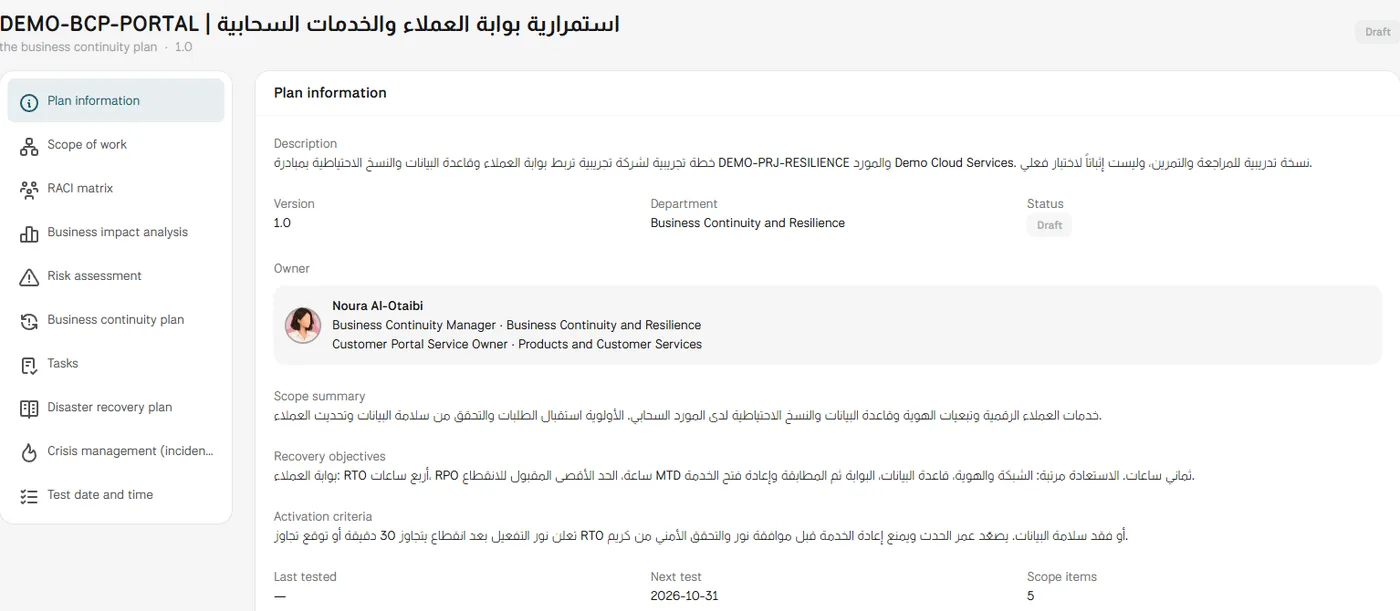
In MUNTABIQ, a business continuity plan is a structured record rather than a static document. It holds the plan owner and department, the assets in scope, recovery objectives and activation criteria, a RACI matrix, a business impact analysis with RTO, RPO and MTPD, alternate procedures, a disaster recovery plan, linked risks and incidents, tasks and scheduled tests. Every change is kept in the plan's activity log.
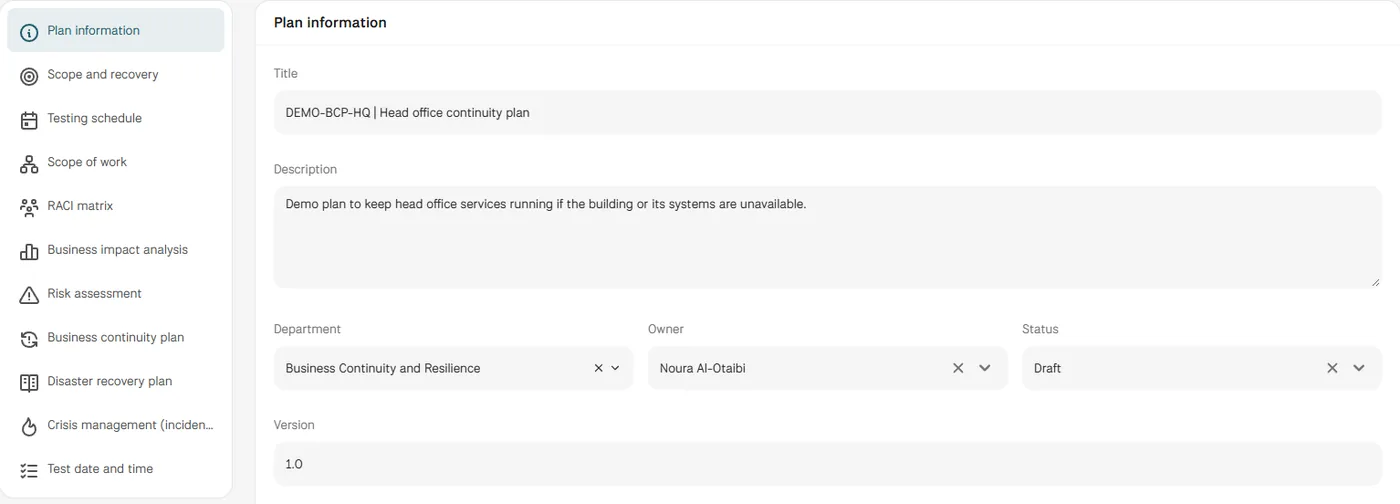
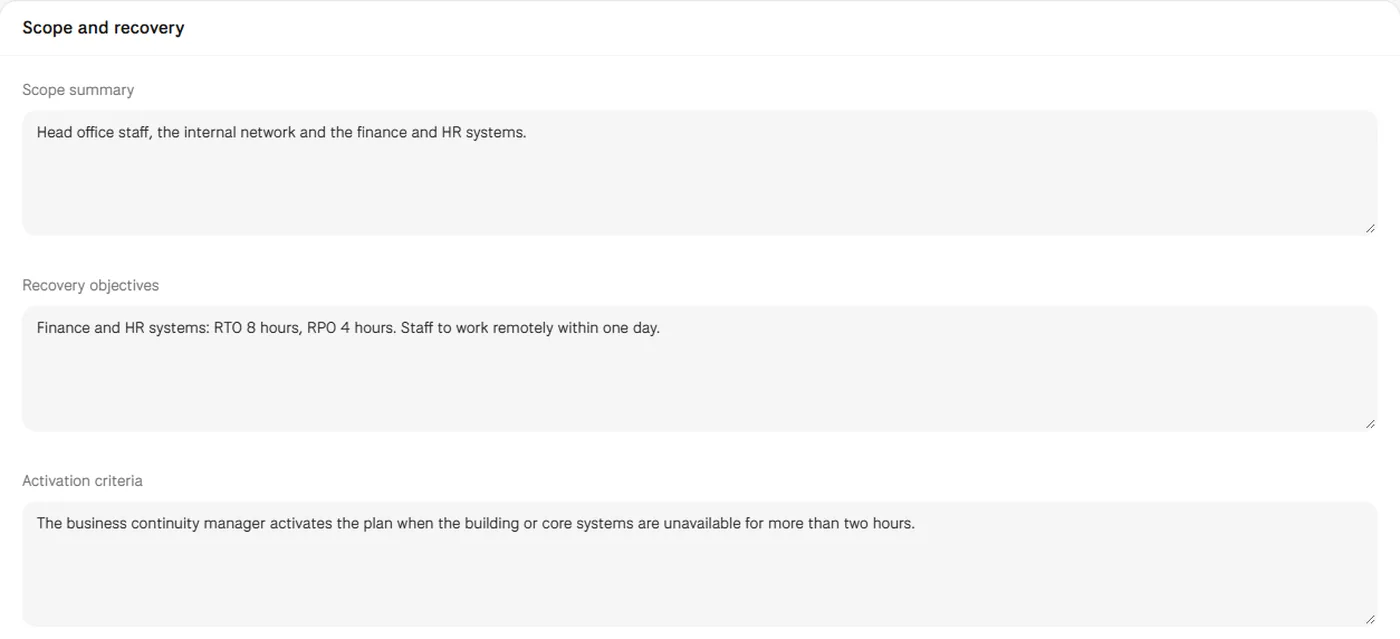
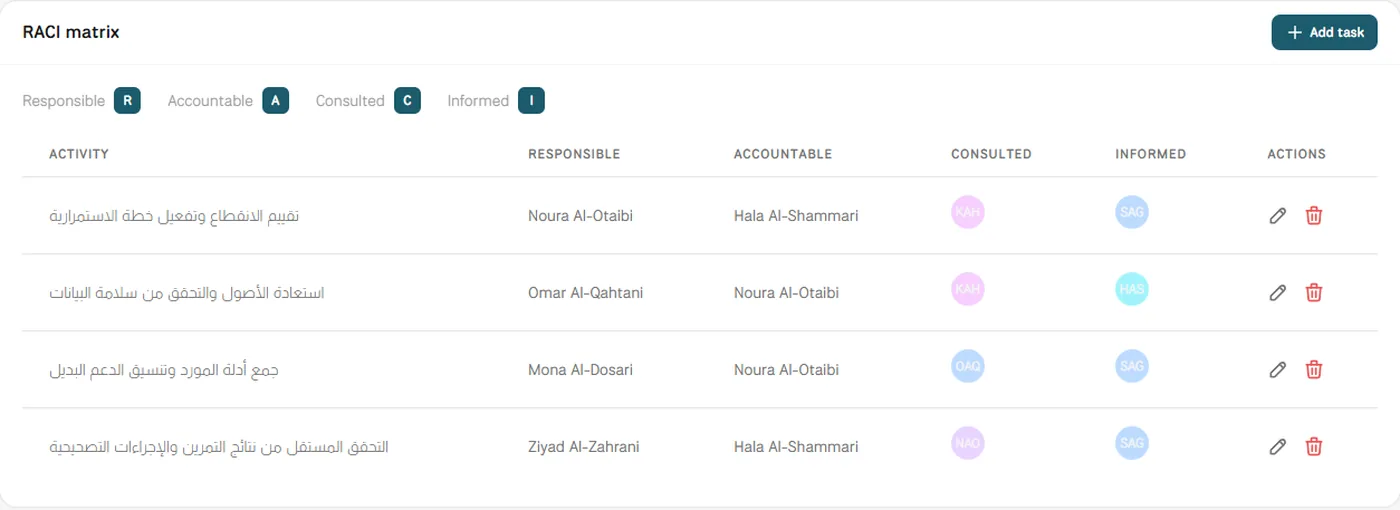
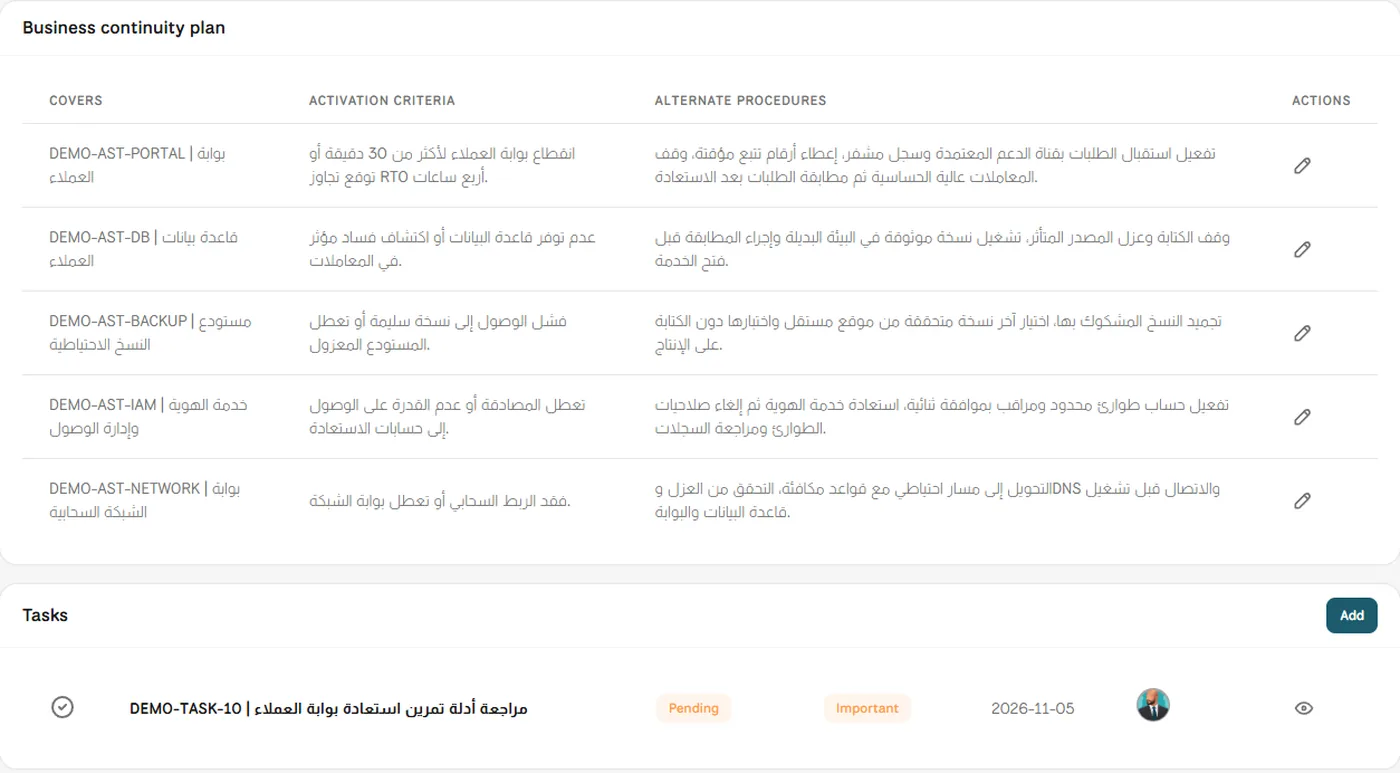
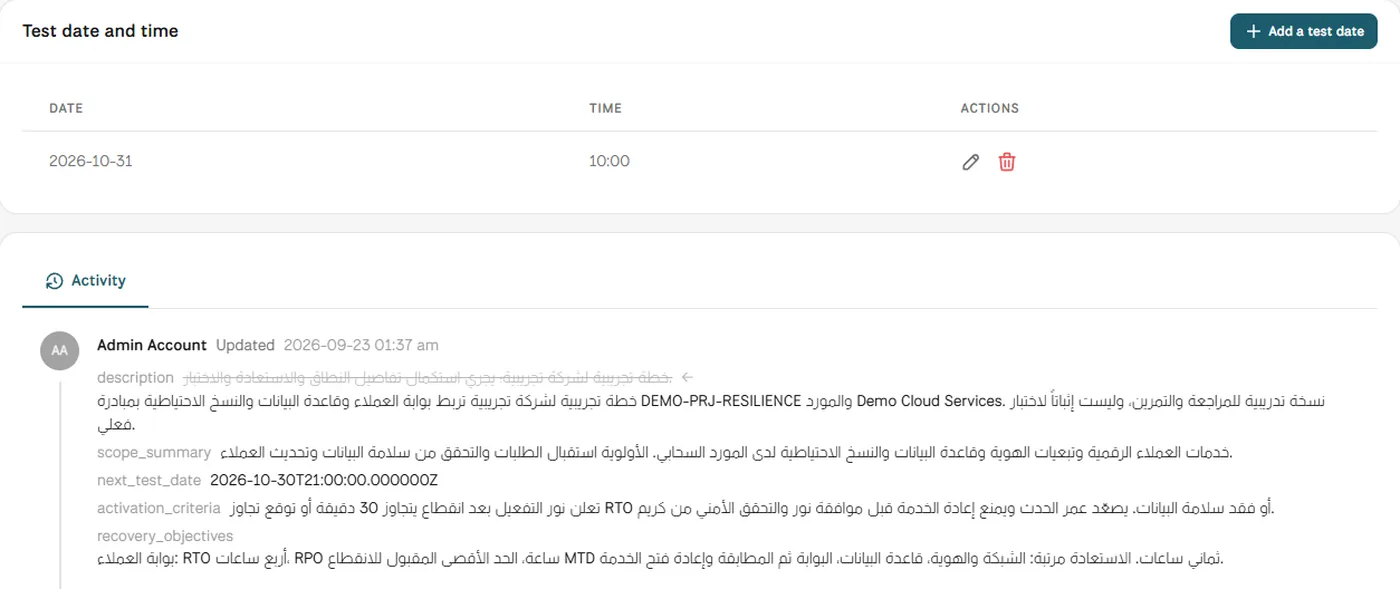
Screens from MUNTABIQ with demo data.
Each plan and each activity in it has a named owner, instead of a document nobody is sure they own.
Activation criteria and recovery objectives are written into the plan, so the team does not debate them during a disruption.
Tasks, test dates and every change to the plan stay on the same record for the next review.
Builds and maintains continuity plans, with their scope, impact analysis and test schedule in one place.
Knows the alternate procedure for each service and who is responsible for restoring it and its backups.
Checks that critical assets have a plan, linked risks and a scheduled test, and follows the open tasks.
Each plan holds activation criteria written in advance, such as when the plan applies and who decides, and its status shows whether it is Draft or Active. The decision stays with your continuity manager, and MUNTABIQ keeps the plan, the roles and the follow-up on record. It does not replace your operational recovery tools.
In the RACI matrix you add each activity and choose who is responsible, accountable, consulted and informed. The disaster recovery plan names a responsible person for each item, and every task linked to the plan has its own assignee and due date.
Yes. The plan keeps its linked tasks, scheduled tests and linked incidents, and the Activity log shows who changed what and when. Note that Last tested and Next test are entered by hand, so update them after each exercise.
Request a demo and we will walk you through these steps on the services and plans that matter to you.
